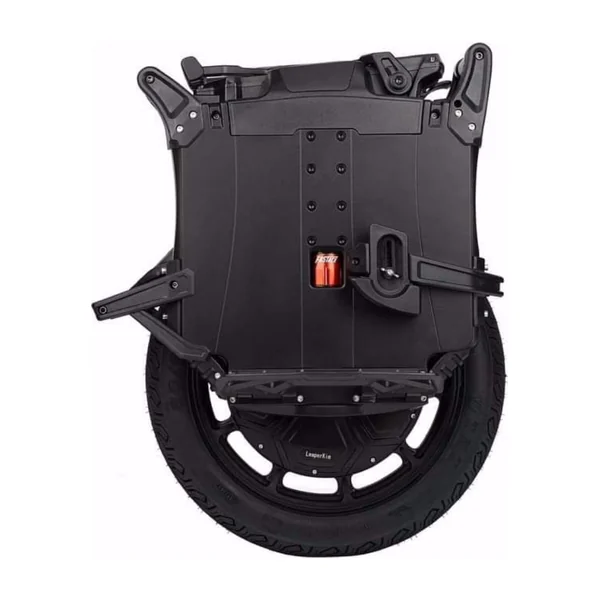
Short answer: ignore the miles on the product page and read the watt-hours. Divide the battery by 25 to 40 Wh per mile, depending on your weight and speed, and keep a fifth in reserve. That gives roughly 15 to 24 real miles from a 750 Wh wheel, 30 to 48 from 1,500 Wh, and 80 to 128 from 4,000 Wh. For most riders the sweet spot is 1,500 Wh: the InMotion V11Y had it for $1,299 on November 13, 2026. For all-day touring, the Leaperkim Sherman-L carries 4,000 Wh.
Why can't you trust the claimed range?
Not because sellers lie, but because nobody agrees on the test. A claimed range is usually ridden by a light rider at a steady, gentle speed on flat ground in mild weather. Change any one of those and the number falls. Change all four, which is what a 200 lb commuter does on a cold morning, and it can halve.
You can see it in the sellers' own figures. Divide battery by claimed miles for the small wheels we compare and you get 16 to 20 Wh per mile: the InMotion V8S claims 46.6 miles from 728 Wh. Then look at what the same industry says when it is being candid. InMotion's FAQ for the V9 calls 20 to 30 miles typical on 750 Wh, against 37 advertised. That is 25 to 37 Wh per mile: consumption half as high again as the brochure assumes, or more.

How do you turn watt-hours into miles?
With one division. Watt-hours are the size of the tank; watt-hours per mile is your consumption.
- About 25 Wh per mile: a lighter rider at 12 to 15 mph on a small wheel, flat ground, mild day.
- About 30 to 35 Wh per mile: an average adult at 18 to 22 mph on a mid-size wheel. eWheels' figure for the Patton-S, about 60 miles at 20 mph from 2,220 Wh, works out to 37.
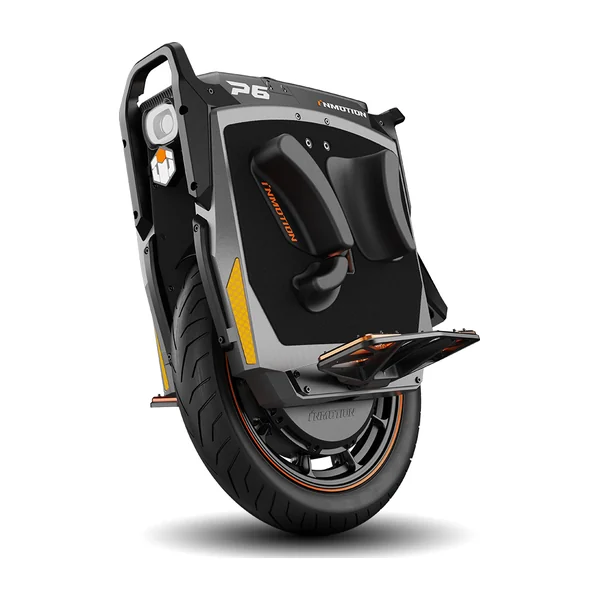
- 40 Wh per mile and up: heavy riders, fast riding, hills, knobby tires, cold. eWheels quotes "50 to over 100 miles" for the 4,200 Wh InMotion P6 depending on average speed: 42 to 84 Wh per mile.
Pick your line, divide, then multiply by 0.8 to keep a reserve. A 1,500 Wh wheel at 32 Wh per mile: 47 miles on paper, 37 you can plan on.
Why keep a reserve?
Two reasons, and the second matters more. The first is obvious: you don't want to walk home pushing 66 lb.
The second is balance. A wheel holds you up with motor power, and a battery near empty can deliver less of it. Voltage sags under load, and the wheel's safety margin shrinks exactly when you are tired and far from home. Wheels warn you with beeps and tilt-back and slow you down as the battery drops. Respect that. Riding hard on the last 15% is the classic way to meet the pavement. Our safety gear guide explains cut-outs in more detail. A bigger battery is a safety feature for this reason too: at the same point in the same ride, it is fuller.
Video: "Inmotion V12S Range Test - What Are the Numbers?", Duf on YouTube. Not made by us; chosen because it shows the wheel or the topic clearly.
What eats range the fastest?
Speed, first and by far. Air resistance climbs steeply as you go faster, so cruising at 28 mph instead of 18 costs a large share of your range. This is why eWheels' range for the P6 spans a factor of two "depending on your average riding speed".
Rider weight comes next, then hills, though you get a little back from regenerative braking on the way down. Cold is the sneaky one: lithium cells deliver noticeably less energy near freezing, so a winter commute gets noticeably fewer miles. Tire choice and pressure matter at the margin: a knobby tire on pavement and a soft tire both cost miles. And a battery ages; after a few hundred full cycles expect somewhat less than new.
How much battery do you actually need?
Work back from your longest regular ride, not your dream ride.
A 6-mile commute each way is 12 miles a day. At 30 Wh per mile with a reserve, that is 450 Wh: even the 420 Wh KingSong 14D Pro nearly manages it, and a 750 Wh wheel like the V9 does it with room for errands. A 15-mile commute each way, or weekend rides of 30 to 40 miles, calls for about 1,500 Wh: the V11Y, the InMotion V12S (1,440 Wh) or the KingSong 16X Pro (1,554 Wh). Group rides of 50 miles and more are where 2,400 to 2,700 Wh earns its weight, and all-day touring is the reason 4,000 Wh wheels exist.
Bigger is not free. Each step up adds roughly 10 to 25 lb and $500 to $1,500. Buy the battery you will use most weeks.

Does fast charging replace a big battery?
Partly, and for some riders completely. If you can plug in at your destination, charging speed is range. The V9 fills in about an hour with a 10 A charger, per InMotion. The KingSong F18 ships with a 10 A charger and takes 2 to 3 hours for 2,664 Wh. The InMotion V14 Pro reaches 80% in about an hour with a 16 A charger. The Leaperkim wheels at eWheels accept 20 A.
Check two things before counting on it. First, which charger is in the box: the fast figure usually needs an optional one. The V12S page lists only a 2.8 A charger and 7 hours. Second, where you will plug in. A fast charger draws real power, and a cafe may not love you for it.
Which wheels go farthest?
By battery, the order is simple: the InMotion P6 (4,200 Wh, $4,799), the Leaperkim Sherman-L (4,000 Wh, $3,899), then the Lynx-S (2,700 Wh) and the KingSong F18 (2,664 Wh). By value, the V11Y is hard to beat: its sale price worked out to under 90 cents per watt-hour, the second lowest of the 15 wheels we compare.
Our long range electric unicycle ranking orders every wheel with 1,500 Wh or more, with capacity counting for half. If you are torn between the two giants, read InMotion P6 vs Leaperkim Sherman-L. And if your real question is the commute, the commuting ranking weighs battery against the pounds you carry upstairs.
The wheels in this guide, side by side
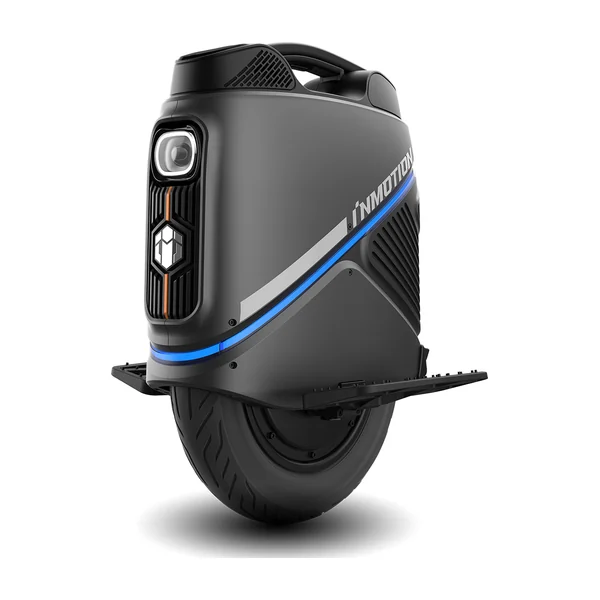
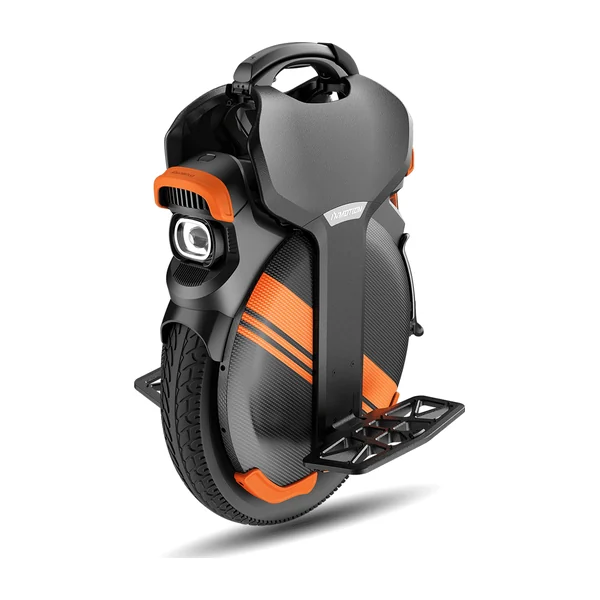
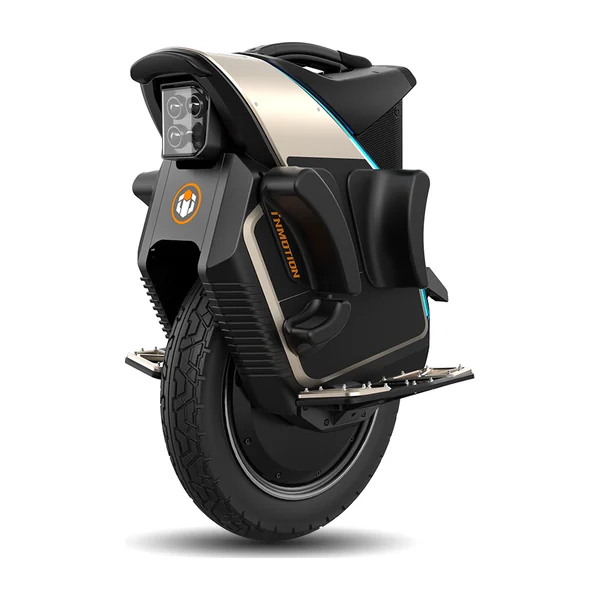
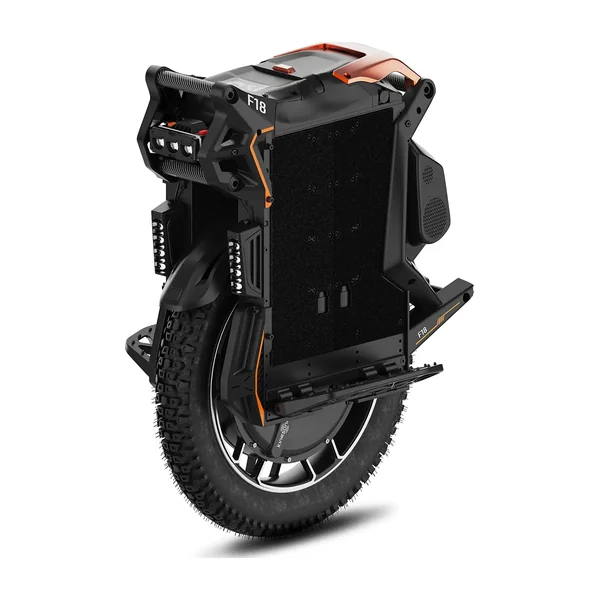
| Wheel | ||||||
|---|---|---|---|---|---|---|
| Battery | 750 Wh | 1,500 Wh | 1,440 Wh | 2,664 Wh | 4,000 Wh | 4,200 Wh |
| Motor | 1,000 W (2,000 W peak) | 2,500 W (7,000 W peak) | 2,500 W (6,000 W peak) | 5,000 W (9,000 W peak) | 3,200 W (8,000 W peak) | 6,000 W (20,000 W peak) |
| Suspension | 60 mm travel | 85 mm travel | 90 mm travel | 100 mm travel | 90 mm travel | 90 mm travel |
| Weight | 50.7 lb | 66 lb | 77 lb | 90 lb | 102.5 lb | 112 lb |
| Top speed | 28 mph (claimed) | 37 mph (claimed) | 43.5 mph (claimed) | 67 mph (claimed) | 57 mph (claimed) | 93 mph (claimed) |
| Range | 37 mi (claimed) | 75 mi (claimed) | 75 mi (claimed) | 93 mi (claimed) | 125 mi (claimed) | 93 mi (claimed) |
| Water rating | IPX6 | IPX6 | IP56 | IPX6 | No rating published | IPX6 |
| Sold by | InMotion | InMotion | InMotion | KingSong | eWheels | InMotion |
| Where to buy | Check price at InMotion | Check price at InMotion | Check price at InMotion | Check price at KingSong | Check price at eWheels | Check price at InMotion |
✓ marks the best figure of the row. Speed and range are claims. Prices checked November 13, 2026 at the seller named in the table.