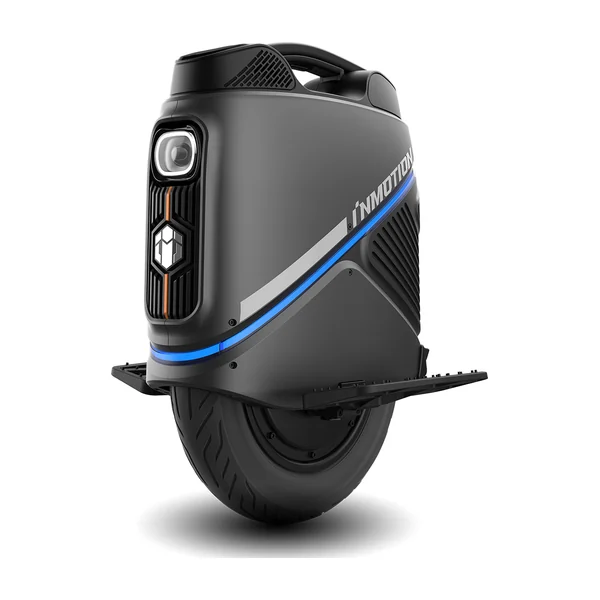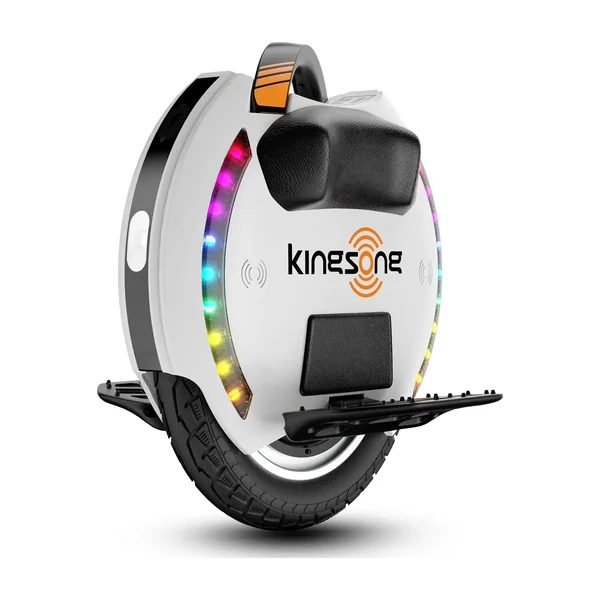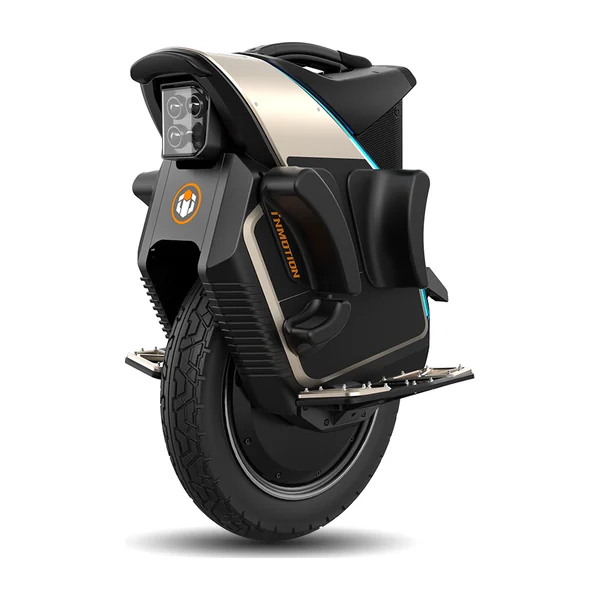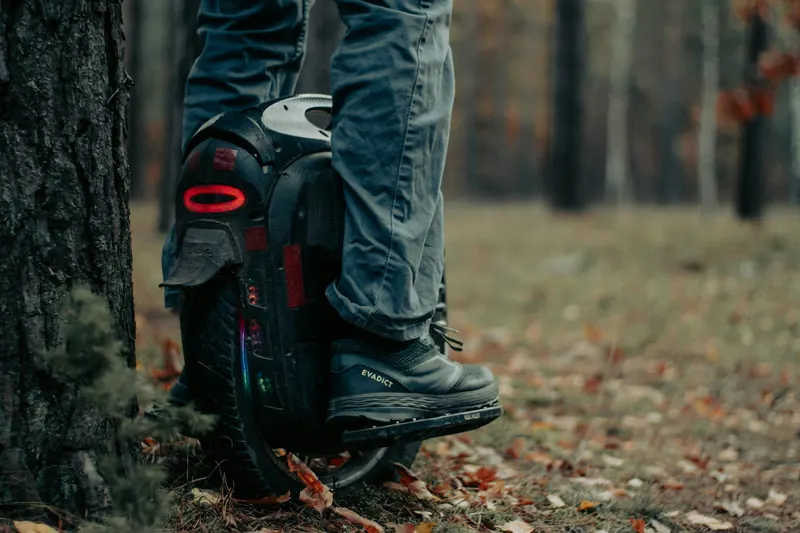
Short answer: there is no single US rule. Buying one is rarely the problem; riding it on public streets, bike lanes and sidewalks depends on your state's vehicle code and your city's ordinances. Some places fit wheels into a "motorized board" or personal-device category with a speed cap around 15 mph. Some never mention them. New York City lists the devices it allows, and the unicycle isn't on the list. Below: what three official texts say, and how to check your own. This is general information, not legal advice.
Why is there no simple yes or no?
Because traffic law works by categories, and the electric unicycle arrived after the categories were written. A bicycle has pedals. An e-bike has pedals and a motor under a wattage limit. An e-scooter has a handlebar and a floorboard. A wheel has none of those.
So in each state the question is whether some existing definition happens to cover it: "electrically motorized board", "electric personal assistive mobility device", "motorized skateboard", "toy vehicle". Definitions usually come with limits on motor power and speed, and those limits were written with small devices in mind. A 14-inch learner wheel may fit where a 4,000 W wheel plainly does not. And cities can add their own rules on top of the state's.
What does California's code say?
California has a category that many riders point to: the "electrically motorized board". Vehicle Code 313.5 defines it as a wheeled device with a floorboard designed to be stood upon, no more than 60 inches deep and 18 inches wide, for one person, with an electric propulsion system "averaging less than 1,000 watts" and a maximum speed of no more than 20 mph on a paved level surface.
For devices in that category the rules are specific. The rider must be 16 or older (section 21291) and wear a bicycle helmet (section 21292). The board may only use roads with a speed limit of 35 mph or less, unless it stays within certain bikeways, and may not exceed 15 mph on any road, bikeway, path, sidewalk or trail (section 21294).
Read the definition against a spec sheet, though. Most wheels sold today have motors rated well above 1,000 W and claimed speeds above 20 mph. Whether a given wheel counts is a question for the statute and the officer in front of you, not for a retailer or for us.
What about New York City?
New York City takes the opposite approach: it lists what is allowed. The transportation department's Electric Bicycles & More page has a chart of three e-bike classes, three moped classes and the e-scooter, with a 15 mph limit for e-bikes and e-scooters on city streets. It describes e-scooters as having "handlebars and a floorboard or seat". The electric unicycle does not appear in the chart.
Local television has put it more bluntly; the news report embedded on this page is titled "Electric unicycles are illegal in NYC". We link the city's own page so you can read the categories yourself.
New York City also regulates what may be sold. Since September 16, 2023, battery-powered mobility devices sold, leased or rented in the city must be certified by an accredited testing laboratory to UL standards, as the Department of Consumer and Worker Protection announced. That is one reason we score UL certification when a seller states it.
Video: "Electric unicycles are illegal in NYC", FOX 5 New York on YouTube. Not made by us; chosen because it shows the wheel or the topic clearly.
Has any city written rules just for electric unicycles?
A few have tried, and the texts are instructive. In Santa Fe, New Mexico, a 2023 city bill (Bill No. 2023-24) proposed adding the electric unicycle to the traffic code by name: a device with one wheel and a motor of no more than 750 W, in two classes, up to 20 mph and up to 28 mph. It would apply bicycle rules to unicycles "to the extent feasible" and bar riders under 16 from the faster class. The copy we read is the bill as drafted; check the city's current code for what was adopted.
Notice the 750 W. Like California's 1,000 W, it sits below the motor rating of almost every wheel on sale: the smallest motor among the 15 wheels we compare is 800 W. Lawmakers who do write rules tend to have small, slow devices in mind.
How do you check the rules where you live?
Give it thirty minutes before you buy. In this order:
- Your state's vehicle code. Search the official legislature site for "electric unicycle", then "motorized board", "electric personal assistive mobility device" and "micromobility". Read the definition, then the operating rules attached to it: speed, age, helmet, where you may ride.
- Your city's municipal code. Search the same words plus "sidewalk". Cities often ban motorized devices from sidewalks, downtown zones or boardwalks.
- Parks and trails. Rules are set by whoever manages the land. Many trail systems restrict motorized vehicles of any kind.
- Transit and buildings. Your transit agency, campus, employer and landlord can each have a policy on battery vehicles; some ask for UL certification.
- A phone call. If the texts are unclear, ask the non-emergency police line or the city's transportation department how they treat the device. Note who told you and when.

How do riders stay out of trouble in practice?
Where the law is silent or vague, behavior decides most encounters. Going fast among pedestrians, riding on a crowded sidewalk or running lights is how to get stopped anywhere. The riders who get waved through act like considerate cyclists: bike lane or right side of the road, bicycle speeds, lights on at night, helmet on, slowing to walking pace near people on foot.
A modest wheel helps. A 32 lb KingSong 14D Pro with a claimed 18.6 mph top speed draws a different kind of attention than a 100 lb wheel built for 50. So does a UL-certified one when a building manager asks. If commuting is your goal, our ranking of electric unicycles for commuting favors exactly those wheels, led by the InMotion V9. And whatever the law requires, wear the gear: see our safety gear guide.
Should the legal question change which wheel you buy?
It can. If you live where rules are strict or enforced, a light, UL-certified wheel that you ride at 15 mph is the easiest to defend and the easiest to carry when you have to walk a stretch. The V9, the 14D Pro and the InMotion V12S all state UL certification on their pages.
If your riding is mostly private land, rural roads or organized group rides, the question weighs less, and you can choose on range and suspension. Either way, nobody can promise you that a 50 mph wheel is street legal in your town, and a seller's page is not the place to find out. Read the code first. Then enjoy the ride: all 15 wheels are in our ranking of the best electric unicycles.